
Contributors: Pete Wright, Mari Chikvaidze, Cristina Mio, Gamze Inan, Kate O’Brien
The reading group is for those wishing to engage with research literature on TMSJ and discuss its relevance to practice. The seventh online reading group meeting took place on 29th April 2024. We chose to discuss the 2022 paper titled “Developing ‘deep mathematical thinking’ in geometry with 3- and 4-year-olds: A collaborative study between early years teachers and university-based mathematicians”, authored by Oughton et al.
We began by breaking into smaller groups to discuss the following questions:
- This paper does not explicitly focus on social justice, so we wonder: what aspects of teaching mathematics for social justice surface for you?
- What are your thoughts on the evidence the article provides about how the students explore the circle concepts? What kinds of observations do you make in the classroom related to students’ speech, gestures, and/or material experiments?
- Considering the insights from this research, what aspects of your teaching practice do you think could benefit from a similar collaboration between professional mathematicians, mathematics educators, and students?
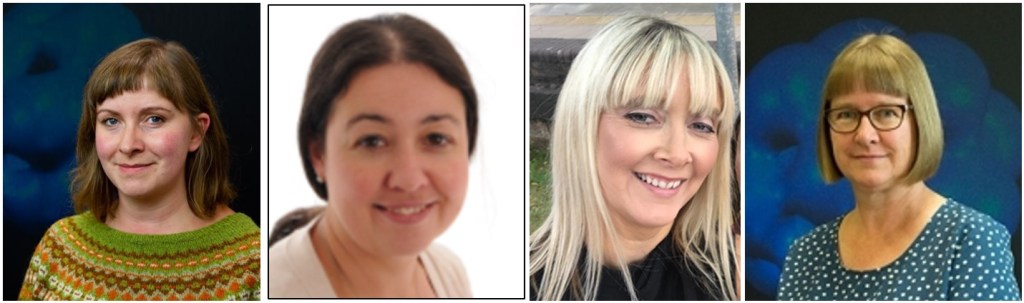
We were joined for the second half of the meeting by four of the article’s authors – Rachel Oughton, Kathryn Nichols, Sarah Dixon-Jones, and Sophy Darwin – who helped facilitate a thought-provoking discussion of the issues raised in the paper, prompted by questions and comments from the groups.
Here are some reflections on the paper and the meeting from those who attended …
Pete Wright (University of Dundee)
The paper demonstrates how 3- and 4-year-old children are capable of exercising agency in their learning of mathematics if they are given opportunities to ask questions and articulate ideas that interest them. It was fascinating how the university-based mathematicians noticed similarities between the kind of work undertaken by the young learners and their own work. Some people might find this surprising, perhaps highlighting common perceptions about mathematics and what mathematics learning should look like. The reading group discussion considered how schooling ends up repressing such creative thinking in children and pressurises mathematics teachers into being prescriptive through pressure to cover curriculum content, rather than having the confidence to listen to learners and draw on their experiences and ideas as part of mathematics learning. This isn’t necessarily the case in all subjects. So why does it happen in mathematics and what could we do to change this situation? Should our focus be on curriculum change, or on professional development, or on challenging public perceptions of what mathematics is and what mathematics teaching could or should look like? My thinking is that we need to address all these areas in advocating for mathematics teaching that cultivates the type of creative thinking that all children need to develop. Only then can learners appreciate what mathematics is all about and how they can use it to understand and respond constructively to the world around them.
Mari Chikvaidze
It was a very insightful article and the one I enjoyed discussing. We all agreed that the article challenges the idea that young children can only handle basic counting and shapes. It highlights how limited curriculums and teacher training can hold them back. Listening to the authors, we learned that when educators and mathematicians work together to create a stimulating environment, children can naturally explore complex ideas like patterns in nature. This leads to “deep geometrical thinking,” where they go beyond recognizing shapes to understanding their properties and relationships. This is so exciting for me because I realised young children have a greater potential for mathematical learning than we might have thought.
Cristina Mio (University of Glasgow)
I found this paper fascinating. It gives several different examples of how very young children, in this case 3- and 4-year-olds, make sense of the world around them through insightful observations and mathematical thinking. In the paper, and during the online discussion, the early-years practitioners’ passion for teaching these young children and the respect they have for children’s views and reasoning was evident.
The paper is also a wonderful example of collaboration between professionals with different expertise: mathematicians, mathematics educators and early-years practitioners. The synergy between the authors came through very strongly during the online discussions. And this collaboration will have a snowball effect. It will not only impact the children and the teachers directly involved in the study, but, through the teachers’ learning, it will affect future pupils’ learning and other colleagues’ practice.
During the online discussion, I made a note of a comment from one of the authors: they said that, at the beginning of the project, they were not aware of van Hiele’s theory of geometric understanding, but when they learnt about it, they were able to make more sense of what they had observed in the children’s responses and reasoning. I thought this was a good example to show the importance of theory and research to guide teachers’ practice.
Finally, when reflecting on the paper, I thought of Priestley’s ecological approach to teacher agency: the supportive management of this pre-school and the confluence of passionate professionals created the opportunity for these practitioners to be agentic and enhance their own knowledge, positively impact the children’s learning, and, through this paper, reach and benefit an even wider audience…
Gamze Inan (Co-chair, University of Cambridge)
I really enjoyed reading this paper. It was fascinating to see how 3- and 4-year-old children experiment with concrete materials, strings, and tapes, exploring concepts collectively and collaboratively using their own language. Instead of focusing on the students’ cognitive developmental level based on Piagetian cognitive theory, which suggests that children at this age cannot deeply understand mathematics, this paper shows children exploring concepts, properties, and even theorems through dialogue. The teacher acts as an equal learning partner.
Besides the classroom dynamics, the dynamics between the teacher and researchers in this study were particularly interesting. They all worked together on the same level to exchange ideas, creating a unique level of positionality. This collaborative spirit was also reflected during the reading group meeting. They noted that, during the study, they collectively decided on the direction to take and how to support each other. Teachers observed that their conversations with mathematicians were unlike any previous experiences. Their observations of children were valuable to researchers, as teachers have a unique understanding of their students’ needs, language, and context.
This approach fosters teaching, learning, and research in a democratic and just manner. This is the most important aspect of ‘Teaching Mathematics for Social Justice.’ My question is: would it be possible to expand this study on a larger scale? Instead of making teachers accountable for students’ learning through a teacher assessment system, could we create a collaborative space for teachers, mathematicians, and mathematics educators? This may help teachers feel less controlled by a top-down system and more engaged in a balanced positionality.
 The Teaching Maths for Social Justice Network